
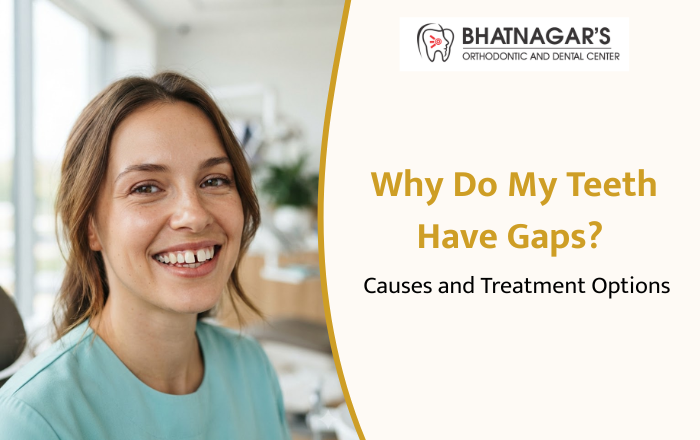
Gaps between teeth, medically known as diastema, are more common than many people realize. Some individuals are born with a naturally spaced smile, while others develop gaps over time due to habits, gum health, or changes in jaw structure. Whatever the cause, gaps in your teeth can affect not just your smile’s appearance, but also your bite, speech, and long-term oral health.
If you’ve noticed a gap forming or one you’ve had since childhood this blog explains why it happens and the orthodontic treatments available to close it safely and effectively.
What Is Diastema?
Diastema refers to any noticeable space between two teeth, though it most commonly appears between the upper front teeth. It can involve a single gap or multiple spaces throughout the mouth. While diastema is often purely cosmetic and harmless, in some cases it can be a sign of an underlying dental or gum issue that needs attention.
Common Causes of Gaps Between Teeth
1. Tooth Size and Jaw Size Mismatch
When teeth are smaller than the jawbone can naturally accommodate, extra space is left between them. This is one of the most common and purely genetic causes of dental gaps.
2. Missing or Undersized Teeth
If a tooth is missing or smaller than average — a common issue with lateral incisors, for example — neighboring teeth may drift apart, creating a visible gap.
3. Oversized Labial Frenum
The labial frenum is the small tissue connecting your upper lip to your gums. If it extends too far down between the front teeth, it can create or widen a gap over time.
4. Gum Disease
Periodontal disease can lead to bone loss around the teeth, causing them to shift, loosen, or drift apart — often resulting in new or widening gaps.
5. Thumb-Sucking or Tongue Thrusting
Childhood habits like prolonged thumb-sucking or pushing the tongue against the front teeth can gradually shift teeth outward, creating spacing issues that persist into adulthood if untreated.
6. Improper Swallowing Reflex
Some people develop a swallowing pattern where the tongue presses against the front teeth instead of the roof of the mouth, applying constant pressure that can push teeth apart over time.
7. Missing Teeth from Extraction or Injury
When a tooth is lost and not replaced, surrounding teeth can gradually shift into the empty space, sometimes creating uneven gaps elsewhere in the smile.
8. Natural Growth and Aging
As we age, natural changes in gum and bone structure — combined with everyday chewing forces — can subtly shift teeth positioning and open small gaps over the years.
Are Gaps Between Teeth a Problem?
Not always — many people have gaps that are purely cosmetic and cause no functional issues. However, gaps can sometimes lead to:
– Food getting trapped between teeth, increasing the risk of cavities and gum irritation
– Speech difficulties, particularly with certain sounds
– Bite misalignment, which can affect chewing efficiency
– Self-consciousness about the appearance of your smile
If a gap is caused by an underlying issue like gum disease or tooth drifting, it’s especially important to address it early to prevent further complications.
Treatment Options for Closing Gaps Between Teeth
The right treatment depends on the size of the gap, its underlying cause, and your overall dental health. An orthodontist can recommend the most suitable option after a thorough evaluation.
1. Braces
Traditional metal or ceramic braces gradually move teeth into proper alignment, closing gaps while also correcting any related bite issues. Braces are especially effective for larger gaps or when multiple teeth need repositioning.
2. Clear Aligners
For smaller to moderate gaps, clear aligners offer a discreet, removable alternative to traditional braces, gradually shifting teeth into place over a series of custom-fitted trays.
3. Dental Bonding
A tooth-colored resin material can be applied to the edges of teeth bordering the gap, closing the space cosmetically without the need for orthodontic movement. This is best suited for smaller gaps.
4. Porcelain Veneers
Custom-made veneers can be shaped to close gaps while also improving the overall shape, size, and color of the teeth for a complete smile makeover.
5. Dental Implants or Bridges
If a gap is due to a missing tooth, an implant or bridge can fill the space, restoring both appearance and chewing function while preventing further shifting of neighboring teeth.
6. Frenectomy
When an oversized labial frenum is the cause, a simple procedure to trim or reposition the tissue can prevent the gap from persisting or widening, often performed alongside orthodontic treatment.
7. Gum Disease Treatment
If gum disease is contributing to shifting teeth, treating the underlying periodontal issue is essential before or alongside any cosmetic or orthodontic correction.
What to Expect During Treatment
Your orthodontist will begin with a full evaluation, often including X-rays, to determine the exact cause of your gap and recommend the best treatment path. Orthodontic options like braces or aligners typically take several months to over a year, depending on the complexity of the case, while cosmetic solutions like bonding or veneers can often be completed in one or two visits.
Tips to Maintain Results After Treatment
– Wear a retainer as recommended to prevent teeth from shifting back
– Maintain good oral hygiene to protect against gum disease
– Avoid habits like nail-biting or teeth grinding that can affect alignment
– Attend regular dental checkups to monitor long-term stability
Frequently Asked Questions
Q1: Can gaps between teeth close on their own?
A: Generally, no. While minor shifts can occur naturally, most gaps require some form of dental or orthodontic treatment to close permanently.
Q2: Is it necessary to treat a gap if it doesn’t bother me?
A: Not always — if the gap is purely cosmetic and causes no functional issues, treatment is optional. However, it’s still worth having it evaluated to rule out underlying causes like gum disease.
Q3: How long does it take to close a gap with braces?
A: Treatment time varies based on the size of the gap and overall alignment needs, but it typically ranges from a few months to over a year.
Q4: Are clear aligners as effective as braces for closing gaps?
A: For small to moderate gaps, clear aligners can be just as effective, though larger or more complex cases may still require traditional braces.
Q5: Will my gap come back after treatment?
A: With proper retainer use and good oral hygiene, results are typically long-lasting. Skipping retainer wear, however, can allow teeth to gradually shift back.
Have questions? We’re just a message away! Contact us on WhatsApp — Click Here to Chat with Us
Restore Your Smile with Expert Orthodontic Care
If you’re concerned about gaps between your teeth, seeking professional advice is the first step toward a healthier, more confident smile. Visit Bhatnagar’s Orthodontic & Dental Centre for a comprehensive evaluation and personalized treatment plan. Consult Dr. Deepankar Bhatnagar (MDS – Orthodontics), an experienced orthodontist with over 25+ years of expertise in diagnosing and treating teeth gaps using advanced orthodontic and cosmetic dental solutions. Schedule your consultation today and take the first step toward achieving a beautifully aligned smile.
Recent Post


Services
