
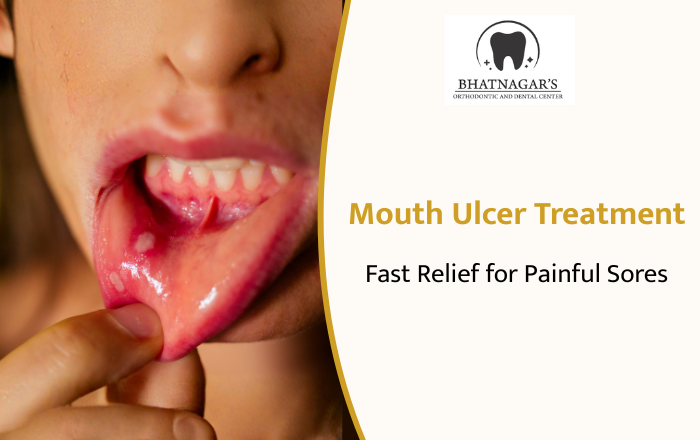
Have you ever taken a sip of hot tea or bitten into something spicy, only to feel a sudden, sharp sting inside your mouth? If yes, you’ve probably dealt with a mouth ulcer. These tiny sores might seem harmless, but they can make eating, drinking, and even talking feel like a real challenge. The good news? With the right mouth ulcer treatment, you can find fast relief and get back to feeling like yourself again.
This guide walks you through everything you need to know — what causes them, how to treat them at home, and when it’s time to see a professional.
What Is a Mouth Ulcer?
A mouth ulcer is a small, painful sore that forms on the soft tissues inside your mouth — on the inner cheeks, tongue, gums, or lips. They usually appear round or oval with a white or yellow center and a red border around them.
The good news is that mouth ulcers are not contagious. Most minor ones heal on their own within 7 to 14 days. However, if they keep coming back or take longer to heal, that’s worth paying attention to.
What Causes Mouth Ulcers?
Understanding what triggers your mouth ulcers is the first step toward preventing them. Here are the most common causes:
• Accidental biting of your cheek or tongue
• Rough or hard toothbrushes irritating the soft tissue
• Vitamin B12, iron, or folate deficiency
• Stress and poor sleep
• Hormonal changes, especially in women during their menstrual cycle
• Spicy, acidic, or very hot foods
• Certain toothpastes containing sodium lauryl sulfate (SLS)
• Underlying health conditions like Crohn’s disease or celiac disease
Interestingly, studies show that up to 20% of the global population deals with recurring mouth ulcers, making it one of the most common oral health concerns worldwide.
Home Remedies for Fast Mouth Ulcer Relief
You don’t always need a prescription to manage mouth ulcer pain. These simple home remedies are backed by both traditional use and modern research:
1. Saltwater Rinse Mix half a teaspoon of salt in a glass of warm water and rinse for 30 seconds. Do this 3–4 times daily. It reduces swelling and keeps the area clean.
2. Honey Raw honey has natural antibacterial properties. Apply a small amount directly onto the mouth ulcer 2–3 times a day for soothing relief.
3. Aloe Vera Gel Fresh aloe vera gel applied directly to the sore can reduce pain and speed up healing. It’s gentle and safe for daily use.
4. Turmeric Paste Mix a pinch of turmeric with a little water or honey and dab it on the ulcer. Curcumin in turmeric is known for its anti-inflammatory properties.
5. Ice or Cold Water Sipping cold water or gently pressing an ice chip near the sore gives quick, temporary numbing relief.
Over-the-Counter Mouth Ulcer Treatments
If home remedies aren’t giving you enough relief, there are several OTC options that work well:
• Topical gels with benzocaine or lidocaine — these numb the area quickly and reduce pain during eating
• Carboxymethylcellulose paste — forms a protective layer over the sore to shield it from irritation
• Chlorhexidine mouthwash — reduces bacteria in the mouth and helps the ulcer heal faster
• Antiseptic lozenges — easy to carry and use throughout the day
These treatments are widely available and can make a big difference in your day-to-day comfort while the mouth ulcer heals naturally.
Foods to Avoid and Foods That Help
What you eat can either speed up or slow down your healing. While dealing with mouth ulcers, try to avoid:
• Citrus fruits like lemon and orange
• Spicy or heavily salted foods
• Crunchy snacks like chips
• Very hot beverages
Instead, go for soft, soothing foods like yogurt, bananas, oatmeal, and cold smoothies. These won’t irritate the sore and will keep you comfortable while you heal.
When Should You See a Doctor?
Most mouth ulcers heal on their own, but there are times when you should get a professional opinion:
• The ulcer lasts more than 3 weeks
• You’re getting multiple ulcers at once
• The sore is unusually large or painful
• You notice difficulty swallowing or speaking
• The ulcer is accompanied by fever or swollen lymph nodes
Don’t ignore these signs. A non-healing mouth ulcer should always be evaluated by a dental or oral health professional.
Ready for Real Relief? Visit Dr. Dipti Bhatnagar in Chandigarh
If your mouth ulcers keep coming back or simply won’t heal, it’s time to get proper care. Dr. Dipti Bhatnagar, an Oral Physician with over 25+ years of experience, has helped thousands of patients in Chandigarh find lasting relief from painful oral sores.
At Bhatnagar’s Orthodontic and Dental Centre, Dr. Bhatnagar takes the time to understand the root cause of your mouth ulcers whether it’s a nutritional deficiency, an underlying health issue, or something else entirely and guides you toward the right mouth ulcer treatment plan.
If you’re in Chandigarh or the tricity area and looking for trusted, experienced mouth ulcer treatment, a consultation with Dr. Bhatnagar is a step worth taking. Because nobody should have to live with that constant, nagging pain.
Name – Dr. Dipti Bhatnagar – Oral Physician & TMJ Specialist in Chandigarh
Address: Hno. 3512, OPD No. 1, Sector 38-D, Sector 38, Chandigarh, 160014
Phone: 95188 31269
FAQ: Mouth Ulcer Treatment
The fastest way to get relief from a mouth ulcer is to apply a topical numbing gel containing benzocaine, rinse with warm salt water, and avoid spicy or acidic foods. Keeping the area clean and free from further irritation helps the mouth ulcer heal quicker. In some cases, a professional laser treatment performed by an oral physician can speed up healing significantly in just one or two sessions.
Deficiencies in Vitamin B12, iron, zinc, and folate are among the most common nutritional triggers for recurring mouth ulcers. If you find yourself getting mouth ulcers frequently without any obvious cause, it is worth asking your doctor for a blood test to check your nutrient levels. Simple supplementation can sometimes make a big difference.
Q3. What foods should I avoid when I have a mouth ulcer?
When dealing with a mouth ulcer, it is best to avoid citrus fruits, spicy foods, salty snacks, very hot beverages, tomatoes, and alcohol. These can irritate the sore and slow down healing. Stick to soft, gentle foods like yogurt, bananas, oatmeal, and cold smoothies until your mouth ulcer heals completely.
Have questions? We’re just a message away! Contact us on WhatsApp — Click Here to Chat with Us
Recent Post


Services
