
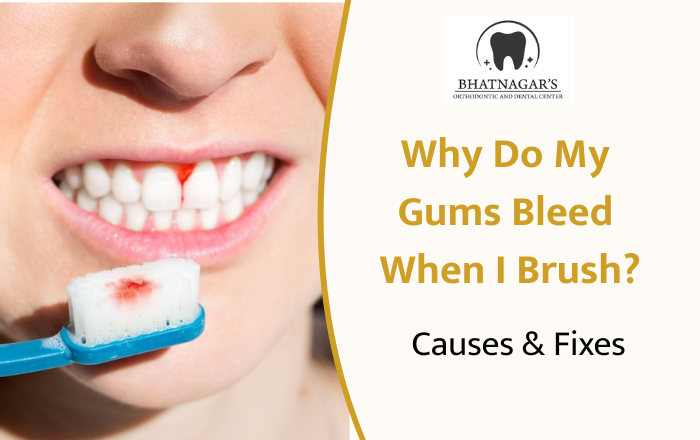
You rinse after brushing and notice something pink in the sink. You think — did that just happen again? If your gums bleed when brushing, you are definitely not alone. Millions of people see this every day and simply ignore it. But here is the truth: bleeding gums are never normal, and they are almost always your body trying to tell you something important. The good news? Most causes are very treatable especially when caught early. Let’s walk through exactly why this happens and what you can do about it.
Is It Normal for Gums to Bleed When You Brush?
The short answer is no — bleeding gums when brushing is not something you should brush off (pun intended). Occasional mild bleeding after switching to a new toothbrush might settle on its own within a week or two. But if it keeps happening, that is your gum tissue signalling inflammation or infection.
Research shows that nearly 47% of adults over 30 have some form of gum disease — and most of them had no idea until the damage was already done. Bleeding is usually the very first sign, which means catching it now puts you in the best possible position.
7 Surprising Reasons Your Gums Are Bleeding
1. Gingivitis — the number one cause most people overlook
Gingivitis is the earliest stage of gum disease. It happens when plaque — a sticky film of bacteria — builds up along the gum line and causes inflammation. Your gums become red, puffy, and they bleed easily. The good news is that gingivitis is completely reversible with the right care.
2. Brushing too hard or using the wrong technique
More pressure does not mean cleaner teeth. Aggressive brushing damages soft gum tissue and causes gums to bleed. Use gentle, circular strokes not a back-and-forth scrubbing motion.
3. A new toothbrush or sudden change in routine
Starting a new flossing habit or switching to a firm-bristle brush can cause temporary bleeding gums. This usually settles within 1–2 weeks if your technique is correct.
4. Vitamin deficiencies — especially Vitamin C and Vitamin K
Low levels of Vitamin C weaken gum tissue and slow healing. Vitamin K is essential for proper blood clotting. A deficiency in either can make your gums bleed more easily than they should.
5. Blood-thinning medications
Aspirin, warfarin, and certain other medications reduce your blood’s ability to clot. If you are on these, bleeding gums may be a side effect worth discussing with both your doctor and your dentist.
6. Hormonal changes
Pregnancy causes significant hormonal shifts that increase blood flow to gum tissue, making it more sensitive. Around 70% of pregnant women experience what is called pregnancy gingivitis — a very real and common cause of bleeding gums.
7. Early signs of periodontitis — more serious gum disease
If gingivitis is left untreated, it can progress into periodontitis — a deeper infection that affects the bone supporting your teeth. This is far harder to treat, which is why acting on early bleeding gums matters so much.
5 Proven Fixes to Stop Gum Bleeding at Home
Bleeding gums treatment does not always mean an immediate dentist visit. Here are five things you can start doing today:
- Switch to a soft-bristle toothbrush. This single change helps most people within two weeks. Pair it with gentle circular strokes at a 45-degree angle to the gum line.
- Rinse with warm salt water. Salt naturally reduces bacteria and soothes inflamed tissue. Mix half a teaspoon of salt in a glass of warm water and rinse for 30 seconds twice a day.
- Floss daily — and do it correctly. Slide the floss gently between teeth in a C-shape around each tooth. Never snap it down into the gums. Daily flossing removes plaque that your brush simply cannot reach.
- Eat gum-friendly foods. Leafy greens, citrus fruits, dairy, and crunchy raw vegetables all support gum health. Cut back on sugary and processed foods that feed harmful bacteria.
- Quit smoking. Smokers are 3 times more likely to develop severe gum disease than non-smokers. Smoking reduces blood flow to gum tissue and slows healing dramatically — making bleeding gums much harder to treat.
When Home Fixes Are Not Enough — Warning Signs to Watch For
Sometimes, bleeding gums go beyond what home care can fix. See a dentist if you notice:
- Bleeding that continues for more than two weeks despite good brushing and flossing habits
- Swollen, red, or receding gums alongside the bleeding
- Persistent bad breath that comes back no matter what you do
- Loose teeth or pain while chewing
These are signs that your gum disease may have progressed and needs professional attention. Do not wait — the longer gum disease is left untreated, the more damage it causes to the bone and tissue holding your teeth in place.
What Does a Dentist Do for Bleeding Gums?
A dentist or oral physician will first identify the root cause of bleeding gums through a full examination. From there, treatment usually involves:
- Scaling and root planing — a deep cleaning that removes tartar and bacteria from below the gum line. This is the most effective first step for most gum disease cases.
- Medication or antibacterial rinses — sometimes used alongside cleaning to control bacterial infection in the gums.
- Guided follow-up care — your dentist will create a routine suited to your specific situation to prevent bleeding gums from coming back.
FAQ: Common Questions About Bleeding Gums
Q1. Why do my gums bleed only when I brush and not otherwise?
Brushing disturbs inflamed tissue at the gum line. This usually means gingivitis is present — the most treatable stage of gum disease.
Q2. Can bleeding gums heal on their own?
Mild cases linked to brushing technique may improve in 1–2 weeks. Persistent bleeding gums need a dental check-up.
Q3. What vitamin deficiency causes bleeding gums?
Vitamin C and Vitamin K deficiencies are the most common causes of bleeding gums related to nutrition.
Q4. Is mouthwash enough to treat bleeding gums?
No. Mouthwash reduces bacteria but cannot remove tartar or reverse gingivitis on its own. It works best as part of a complete oral hygiene routine.
Ready to Stop the Bleeding for Good?
If your gums bleed when brushing and it has been going on for more than two weeks, it is time to get it checked. Bleeding gums respond best to treatment when addressed early.
Book your visit at Bhatnagar Orthodontic & Dental Centre — trusted for Bleeding Gums Treatment in Sector 38, Chandigarh, and easily accessible from Panchkula and Mohali. Led by Dr. Dipti Bhatnagar (Oral Physician) and Dr. Deepankar Bhatnagar, the clinic offers caring, straightforward treatment to get your gums back to health.
Book your consultation today — your gums will thank you.
Recent Post



Services
